
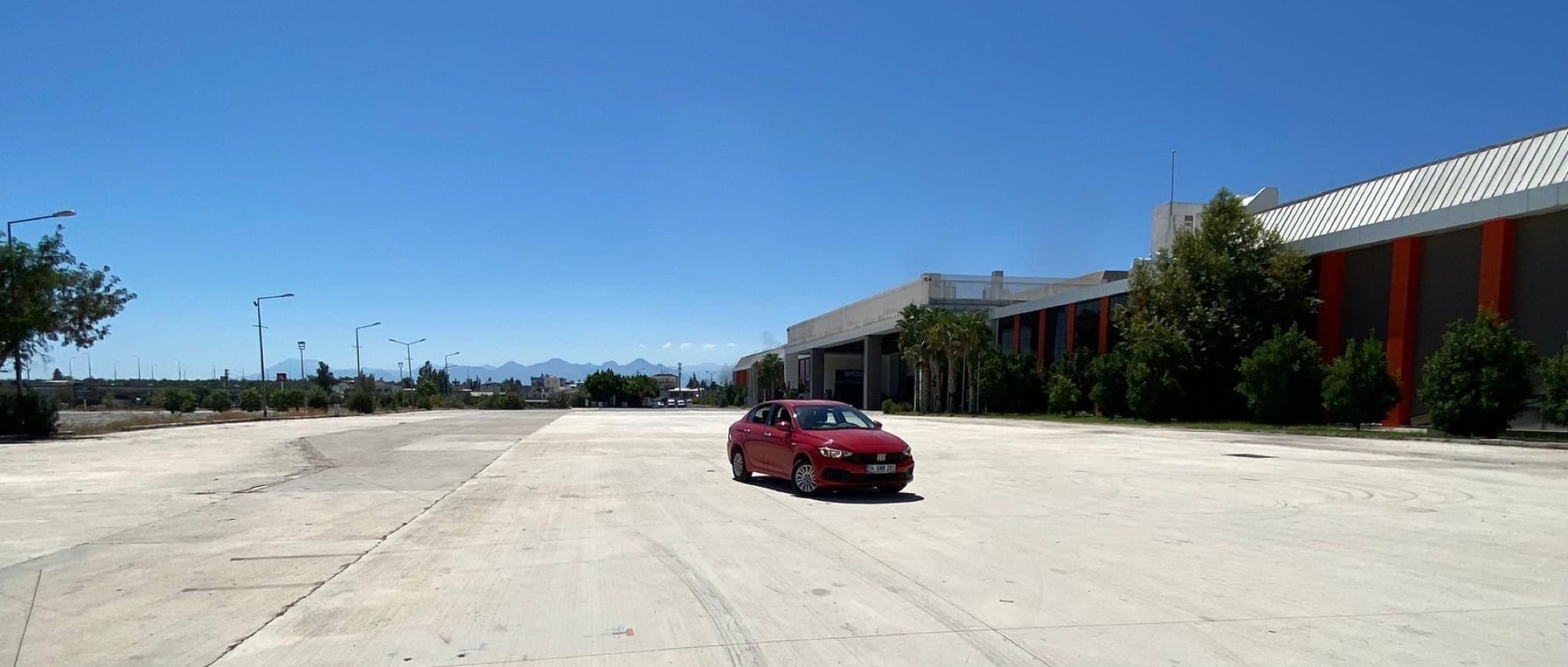
Driving in Antalya is not far off driving in most of Europe. The roads are wide and well kept, signs use international symbols alongside Turkish, and there are fuel stations all along the coast. There are a handful of things that catch visitors out, though, and all of them are easy to learn.
Speed limits and cameras
Turkish limits are 50 km/h in built-up areas, 90 km/h on two-way intercity roads, 110 km/h on divided highways and 120 km/h on motorways. The D400 coast road around Antalya is a divided highway for much of its length, but the limit drops sharply to 50 wherever it runs through a town.
Fixed speed cameras are signposted in advance and they genuinely work. They are thick on the ground between Aksu and Serik and along the Konyaaltı seafront. Any fine incurred during your rental is yours, and it usually arrives weeks after the car has gone back.
The coast road
The road from Antalya to Kemer and the mountain roads up into the Taurus are the best drives in the region — and the bendiest. In summer they carry a lot of coaches and motorcycles. There is no reason to hurry; the view is the point.
One more thing: the asphalt gets seriously hot at midday, and running the air conditioning constantly puts a visible dent in fuel consumption. Factor that in when you plan a long day.
Fuel
Stations are attended — someone will fill the car, you do not need to get out. Ask for "kurşunsuz 95" for petrol or "motorin" for diesel. If you are not sure which your car takes, it is written inside the filler flap, and we tell you at handover.
Tolls
Motorway tolls in Türkiye are collected electronically through a system called HGS — there is no cash lane. Rental cars come with a tag already fitted, so you simply drive through. Toll charges during your rental are yours, and are passed on if they surface later.
Parking
Driving into the lanes of Kaleiçi is not practical; the car parks around the edge are far easier. Side's old centre is closed to traffic too. Along the coast, municipal car parks are marked with blue signs and are inexpensive.
Parking on the pavement is a widespread local habit, but it is not legal and cars do get towed. If your hotel has a car park, use it.
Summer traffic
| Route | Normal | Summer evening |
|---|---|---|
| Airport → Lara | 18 min | 30–40 min |
| Airport → Konyaaltı | 32 min | 50–60 min |
| Airport → Belek | 30 min | 40 min |
| Airport → Side | 55 min | 70–80 min |
On July and August evenings the coast road slows noticeably. Allow for that on the way back to the airport — giving yourself an extra hour before a flight is a good habit here.
If something happens
After an accident or damage, make yourself safe and then call us without moving the car. Even a single-vehicle accident needs a report; if the required documents are not obtained, the loss can fall outside cover. The same goes for a warning light: tell us before you drive any further.